All-on-4 Dental Implants in Cheltenham
All-on-4 is a widely used name for fixed full-arch implant treatment: a complete row of teeth, permanently attached to four implants in the upper or lower jaw. It was developed as a way to give people with no teeth — or failing teeth — a fixed set without needing an implant for every tooth and, often, without bone grafting. Many practices now use similar techniques under different names, sometimes with five or six implants, and some describe it simply as “full-arch” or “fixed teeth on implants”.
In Cheltenham, as elsewhere, it is most often chosen by people who have worn full dentures for years and struggle with them, or who have been told their remaining teeth can no longer be saved.
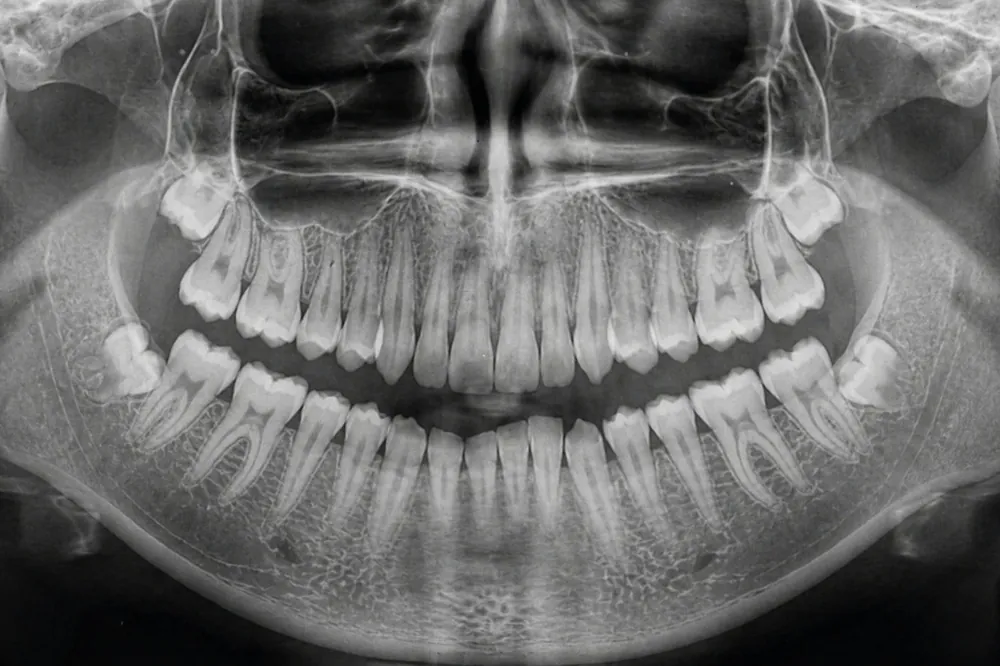
How It Works
Four implants are placed in each treated jaw. The two at the front are straight; the two at the back are usually angled to make the most of the bone available and to avoid the sinuses in the upper jaw and the nerve in the lower jaw. Because the implants are spread along the arch, they can support a full bridge of around ten to fourteen teeth. In many cases a fixed temporary bridge is attached within a day or so of surgery, with a final, stronger bridge fitted once the implants have healed.
All-on-4 vs Implant-Supported Dentures
| Fixed full arch (all-on-4) | Implant-supported denture | |
|---|---|---|
| Comes out? | No — only your dentist removes it | Yes — you unclip it to clean |
| Covers the palate? | No | Upper dentures sometimes do |
| Number of implants | Four or more per arch | Usually two to four |
| Typical cost per arch | About £12,000–£25,000 | About £5,000–£13,000 |
| Cleaning | Brushes and water flosser around the bridge; professional cleans | Remove and clean like a denture |
Read more about implant-supported dentures if a removable option appeals.
Who Is a Good Candidate?
- People who have lost all or most teeth in one or both jaws;
- those whose remaining teeth are failing through gum disease or extensive decay;
- long-term denture wearers with loose, uncomfortable dentures;
- people with some bone loss who want to avoid extensive grafting, where the angled-implant approach can help.
Smoking, uncontrolled diabetes and heavy grinding raise the risks and will be discussed during assessment.
The Treatment Day and Beyond
Planning
3D scan, photographs, bite records and a detailed discussion of how the new teeth should look.
Surgery day
Remaining failing teeth removed, four or more implants placed, usually under local anaesthetic with sedation.
Temporary teeth
A fixed temporary bridge is fitted, often the same or next day, when the implants are stable enough.
Healing period
A soft diet for several weeks while the implants integrate, typically over a few months.
Final bridge
A stronger final bridge is made and fitted, and a maintenance schedule agreed.
Questions to Ask a Cheltenham Practice
- How many full-arch cases have you completed, and can I see examples?
- How many implants will you place, and why?
- What is the final bridge made of, and how long is it expected to last?
- Are extractions, temporaries, sedation and reviews included in the price?
- What happens if an implant fails during healing?
- How often will I need professional maintenance, and what does it cost?
Because full-arch treatment is a major investment, many people speak to more than one dentist before deciding. You can send one enquiry to compare up to three local implant dentists. For a single-visit approach, see same-day teeth.
Typical implant prices
Fixed full-arch treatment typically costs about £12,000–£25,000 per arch, depending on the number of implants and the final bridge material.
- Single implant with crownAbout £2,000 – £3,000
- Implant-retained denture (per arch)About £5,000 – £13,000
- All-on-4 / full-arch fixed (per arch)About £12,000 – £25,000
- Bone graft or sinus lift (if needed)About £400 – £2,500
Typical UK private price ranges gathered from published practice and industry guides in 2026. Each practice sets its own fees and confirms them after a consultation and scan. Full cost guide.
Living With Full-Arch Teeth
Most people adapt to fixed full-arch teeth within a few weeks. Speech can feel slightly different at first, and it takes time to get used to the feel of the bridge against the tongue and lips. Unlike a denture, there is no plate covering the roof of the mouth, so taste and temperature feel more natural.
Cleaning takes a little more effort than with natural teeth. A water flosser and small brushes are used under the bridge daily, and professional maintenance visits — often every three to six months — help keep the implants healthy. Periodically the dentist may remove the bridge to clean it thoroughly and check the implants.
If you are currently wearing a full denture, ask whether it can be worn during any healing period, and how it would be adjusted. Some people move straight to fixed teeth; others have a transition period.