Implant-Supported Dentures in Cheltenham
Conventional full dentures rest on the gums and rely on suction, saliva and sometimes adhesive to stay in place. Upper dentures often manage reasonably well, but lower dentures are notoriously loose because there is less surface for suction and the tongue constantly moves them. Over time the jawbone shrinks, and dentures that once fitted well start to rock, rub and click.
An implant-supported denture — also called an implant-retained or snap-on denture — tackles this by attaching the denture to a small number of implants. It still comes out for cleaning, but it clips firmly into place, so it stays put when you eat, talk and laugh.
How They Attach
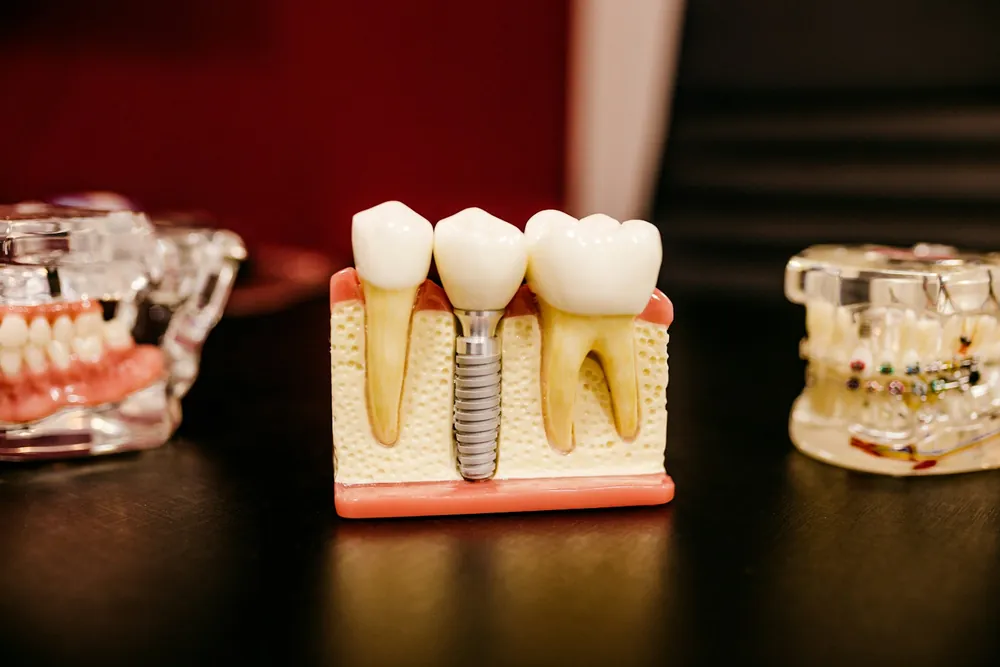
- Ball or locator attachments — small fittings on each implant that click into housings in the denture. Simple, affordable and common for lower dentures on two implants.
- Bar attachments — a metal bar connects the implants and the denture clips onto it, spreading forces and often giving extra stability.
The number of implants varies: two is common for a lower denture; upper dentures usually need more, often four, because the upper jawbone is softer.
Benefits for Long-Term Denture Wearers
- A firm, secure fit without adhesive;
- more confidence eating foods like apples, salad and meat;
- clearer speech, with less clicking and movement;
- an upper denture that can sometimes be made without covering the whole palate, improving taste and comfort;
- implants help slow further bone loss where they are placed.
Using Your Existing Denture
If your current denture is in good condition and fits reasonably, your dentist may be able to adapt it to clip onto new implants, reducing cost. More often a new denture is made, designed around the attachments from the start. Ask which approach is proposed and why.
The Process
Assessment
Examination of your gums and jaw, a scan to check bone, and a look at your current denture.
Implant placement
Usually two to four implants, under local anaesthetic with sedation if you wish.
Healing
You keep wearing a softened denture while the implants integrate, typically over a few months.
Attachments and denture
Attachments are fitted and your new or adapted denture is clipped into place.
Maintenance
Clip inserts wear and need periodic replacement; regular reviews keep everything healthy.
Removable vs Fixed: Which to Choose?
An implant-supported denture costs considerably less than a fixed full arch, usually needs fewer implants and is easy to clean because you take it out. A fixed full arch feels closer to natural teeth and never comes out, but costs more and needs careful cleaning around the bridge. Many people in Cheltenham start with an implant-retained lower denture and are delighted with the difference; others decide fixed teeth are worth the extra investment.
Looking After It
Remove and clean the denture daily, brush the attachments and gums gently, and keep up regular check-ups. The small nylon inserts that grip the attachments wear over time and are routinely replaced, which restores a firm fit.
Typical implant prices
Implant-supported dentures typically cost about £5,000–£13,000 per arch, depending on the number of implants and type of attachment.
- Single implant with crownAbout £2,000 – £3,000
- Implant-retained denture (per arch)About £5,000 – £13,000
- All-on-4 / full-arch fixed (per arch)About £12,000 – £25,000
- Bone graft or sinus lift (if needed)About £400 – £2,500
Typical UK private price ranges gathered from published practice and industry guides in 2026. Each practice sets its own fees and confirms them after a consultation and scan. Full cost guide.
Can I Use My Existing Denture?
Sometimes. If your current denture fits well and is in good condition, a dentist may be able to add attachments to it so it clips onto new implants. More often, a new denture is made at the same time as the implants, because old dentures may be worn or shaped around gums that have since changed. Ask which applies in your case, as it affects both cost and timescale.
Looking After an Implant Denture
Take the denture out every night to clean it and give your gums a rest. Brush around the implant attachments carefully, as plaque can build up there. The small nylon inserts that grip the implants wear over time and usually need replacing every year or so, which is a quick and inexpensive appointment. Regular reviews let the dentist check the implants, the fit of the denture and the condition of your gums.
Upper vs Lower Implant Dentures
Lower dentures are the most common reason people look into implant support, because a lower denture has much less to grip than an upper one and tends to move with the tongue. Two implants can transform how secure it feels. Upper dentures usually stay in better thanks to suction against the palate, but some people want implants so the denture can be made without covering the roof of the mouth. This usually needs four or more implants in the upper jaw.